Signs Of A Balanced And Stable Kansas City Area Real Estate Market On The Horizon

Checking The Pulse Of The Kansas City Real Estate Market

Though our ever-volatile economy makes it impossible to say for sure what the future holds for the housing market,  I’m feeling confident that when we look back on 2012, it’s going to be one of the best we’ve seen in Kansas City, Johnson County Kansas, Overland Park and much of the metro area in more than 5 years. It’s possible the housing market has hit rock bottom, though I’m still seeing reports where more than 10 million homeowners in the U.S. are upside-down on their homes. But the Armageddon of foreclosures predicted to come on the market last year never occurred.

No doubt, most people involved in the housing market (buyers, sellers, investors, mortgage lenders, real estate agents, appraisers, government agencies, etc.) are going to be more cautious going forward. We’ve gone through a crisis that has cost most homeowners and real estate investors a lot of money (or equity) and the situation at times has been likened to the Great Depression… any situation that gets that type of comparison is sure to be etched in our minds forever.

But the real estate market will go up – it always has – and I’m betting that within a few years we’re going to be in a balanced and stable real estate market. It’s already happened in many localized areas where buyers are buying to meet their living needs and sellers are looking for a reasonable return on their investment. Things are certainly looking up as I’ve seen national stats that show there’s 1/5 fewer homes on the market today than last year, listing prices have jumped more than 5% year over year (mostly due to an increase in buyer demand), the average time on market has been reduced 10%, etc.


Posted by Jason Brown

Add to DeliciousAdd to DiggAdd to FaceBookAdd to Google BookmarkAdd to RedditAdd to StumbleUponAdd to TechnoratiAdd to Twitter

Changes Are Evident In The Johnson County Kansas Real Estate Market

Checking The Pulse Of The Kansas City Real Estate Market

As I’ve pulled market stats for clients the past several weeks, there’s been a recurring theme of improved market stats for area home sellers. We’ve been in a buyer’s market for several years but we’ve definitely transitioned recently into a balanced real estate market in some areas. That’s giving confidence to many homeowners to get their homes on the market and make the move they’ve been postponing for several years. It will be interesting as we head into the spring market to see if the recent impressive volume of home sales can counteract the volume of new listings we’re sure to see the next couple of months.

The local real estate market has definitely been gaining momentum recently and while I don’t think we’re ever going to the crazy seller’s market that led up to the housing mess, I think it’s reasonable to expect a slow and steady recovery in Johnson County Kansas, Overland Park and much of the surrounding area. Though if the current real estate market shift continues, it’s going to leave more and more home buyers struggling to understand why there’s fewer homes from which to choose. 

Posted by Jason Brown

Add to DeliciousAdd to DiggAdd to FaceBookAdd to Google BookmarkAdd to RedditAdd to StumbleUponAdd to TechnoratiAdd to Twitter

Are We Nearing The End Of A Buyer’s Real Estate Market In The Kansas City Area?

Checking The Pulse Of The Kansas City Real Estate Market

If you’ve been following my real estate updates on Kansas City, Johnson County, Overland Park and the surrounding area, you’ve probably noticed that the months of inventory in most areas has been improving for several months now. An improved home sale rate coupled with fewer listings hitting the market has cut the amount of inventory drastically. Just ask one of your friends or family members who’s been out shopping for homes and they’ll probably tell you there’s fewer options than they expected. It’s true that the past several years most buyers had so many options their heads would spin. But that trend has been changing in recent months.

Though home prices have still fallen slightly in the past year, the improved sales rate could be foretelling of what’s on the horizon. Before home sales prices begin an upward climb, an improved sales rate must first be established. Since it takes some time for a home to close and because it can take a while for buyers to comprehend that the market has changed, I think it will take at least 6 months after a recovery has begun before home sales prices follow suit. If we’re at that point now, waiting several months to buy a home could leave a buyer in a much more competitive market.

We’re already seeing some sellers pushing back more than they have in years. When a seller realizes there’s less competition on the market, they’re going to arch their backs more. They’ll begin providing fewer concessions to buyers and holding more firm on their price. A recent Bloomberg survey showed national home sales are at their highest level in two years. If these types of trends continue, it’s likely to lead us straight out of our current buyer’s market and into a balanced real estate market in the near future… And with interest rates sure to rise, there’s going to be a lot of home buyers regretting their missed opportunity.


Posted by Jason Brown

Add to DeliciousAdd to DiggAdd to FaceBookAdd to Google BookmarkAdd to RedditAdd to StumbleUponAdd to TechnoratiAdd to Twitter

Improvement In The Home Sales Rate In Kansas Far Outpaces The National Average

Checking The Pulse Of The Kansas City Real Estate Market


The January real estate market stats have been posted by the Kansas Association of Realtors and they show a much improved sales rate state-wide. Home sales rose an astounding 15.5% in the state compared to January of 2011, far out-pacing the national average of a 0.7% increase. This increase continues the pattern of eating into the high inventory of homes experienced over the past several years in Kansas.

Despite the improving sales rate, the average sales price continues to be affected by the volume of distressed homes (foreclosures, short sales, etc.) on the market. The average sales price in January of this year was $138,180 compared to $144,552 in January 2011. This is a 4.4% decrease in the average home sales price in Kansas. There were 16,090 homes for sale in Kansas at the end of January. Compared against the January sales rate of 1,609 homes sold, that calculates to 10.0 months of inventory on the market.

Locally in Johnson County Kansas, the January stats were more impressive. There were 414 homes sold during the month and comparing that to the roughly 2,800 homes for sale in Johnson County Kansas, there’s 6.8 months of inventory on the market. This indicates a slight buyer’s market in Johnson County Kansas. With the spring market around the corner, we’ll see if the demand for homes outpaces the typical high volume of homes expected during the spring months.


Posted by Jason Brown

Add to DeliciousAdd to DiggAdd to FaceBookAdd to Google BookmarkAdd to RedditAdd to StumbleUponAdd to TechnoratiAdd to Twitter

Getting A Home Under Contract Is Great But A Big Speed Bump Could Be Straight Ahead

Checking The Pulse Of The Kansas City Real Estate Market

If you’re selling your home, it’s easy to get caught up in the euphoria once you get your home under contract. Same goes for home buyers. It’s understandable to feel a sense of accomplishment because you really have achieved a critical step in the real estate process. But while many sellers and buyers will already be envisioning the real estate closing, a real estate agent is focused on something much more pressing… the home inspections.

The inspection process can derail the process quicker than most people realize. That’s why we advise our sellers to hold off on the celebration until we’re through the 10 day inspection process. Our buyer’s agents advise our buyers to do the same. I’ve heard many agents over the years say they dread the inspection process because so many of their deals fall apart at that point. That surprises me because we very rarely have a deal fall apart at the inspection process. The process can be worked through methodically and a resolution achieved that is satisfactory to both buyer and seller.

The formula for success in getting through the inspection process will vary from transaction to transaction, but generally I find there’s 6 key components. The first is having a competent home inspector who is capable and willing to take the time to explain the defects put in their report. The second is having a reasonable buyer who understands that minor items can be fixed on their own. The third is having a good buyer’s agent who who will explain to the buyer that asking for trivial items could lead to winning the battle but losing the war. A buyer’s agent will also be a great resource to help a buyer locate professionals who can take care of minor issues after closing.

The fourth component is having a reasonable seller who understands a home inspector is going to look the home over with a critical eye that the buyer and buyer’s agent aren’t able to do and will uncover things that the seller had no idea was wrong with their home. The fifth competent is having a listing agent who explained to the seller that there WILL be items come up that have to be repaired. This needs explained to the seller BEFORE they sign the contract and go under contract. Otherwise the seller will now feel they are being beat down after the fact. A listing agent can also provide a seller with professionals who can handle repairs at a reasonable price.

The sixth component is having a home that’s in good condition. If the home is in terrible shape, the home inspection process could be very trying for everyone involved. Because even if a buyer limits their requested repairs to mechanical, structural, health and safety issues with the home, the list could get very long if the home is in poor condition and/or has had a lot of deferred maintenance over the years. But even those situations can be overcome in most cases and a satisfactory resolution achieved that keeps the transaction moving on towards the closing… which is what the buyer and seller really wanted when they went under contract.

Posted by Jason Brown

Add to DeliciousAdd to DiggAdd to FaceBookAdd to Google BookmarkAdd to RedditAdd to StumbleUponAdd to TechnoratiAdd to Twitter

Kansas Property Tax Collections Are Still Rising Despite Lower Property Values In Many Areas

Checking The Pulse Of The Kansas City Real Estate Market

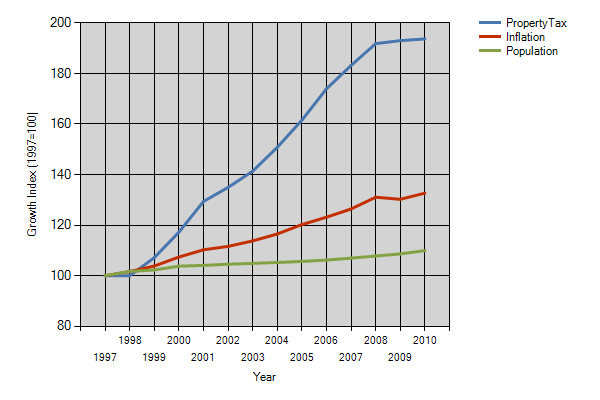
More than 1/3 of all property taxes collected in the state of Kansas come from property taxes. In 2010, property taxes accounted for 35% of the taxes collected overall by both state and local governments across Kansas. According to the KS Department of Revenue, taxes increased 94% between the late 1990’s to 2010. These taxes brought in $1.97 billion dollar in tax revenues in 1997 with that figure jumping to $3.8 billion in 2010. Check out the startling trend of rising property taxes compared to inflation rates.

Though the short-term trend in the chart shows more moderate property tax increases since 2008, the Kansas Association of Realtors is concerned that some sort of property tax reform will be required if we are to avoid a continuation of this troubling trend. Should we see a similar doubling of property taxes within the next decade or so, that trend would not benefit hopes for a housing rebound in the near future. It would certainly put more homeowner’s under water and the dream of homeownership out of reach for many more.


Posted by Jason Brown

Add to DeliciousAdd to DiggAdd to FaceBookAdd to Google BookmarkAdd to RedditAdd to StumbleUponAdd to TechnoratiAdd to Twitter

Shawnee Kansas Real Estate Market Update – December 2011

Checking The Pulse Of The Kansas City Real Estate Market

Real Estate Statistics On Shawnee Kansas
15 Day Glance At The Shawnee KS Real Estate Market

After calculating the absorption rate over the past 15 days in Shawnee Kansas, we find the city has 19.6 months of inventory currently on the market. The low number of homes sold (closed) the past 15 days is the main cause for the high volume of inventory. The sales rate will need to improve from the 9 sales in 15 days that we just experienced if we are to eat quicker into the 353 homes for sale in Shawnee. The Thanksgiving holiday didn’t help, with 13 homes went under contract during the past 15 days.

Type # Average $ Avg DOM
Listings Past 15 Days 16 $194,159
Total Active Listings 353
Newest Contracts Written 13 $163,508 82
Newest Sold (Closed) 9 $190,970 165

* The Average $ of Newest Contracts Written considers the list price when the homes went under contract. Data pulled from Heartland MLS and deemed reliable but not guaranteed. Low samplings in a category can skew results. Stats cover approximately 15 days from post date. DOM = Days On Market.

The average new listing came on the market at just over $194,000, which was in line with average sales prices during the same 15 day period. If you are making plans to buy or sell a home in Shawnee Kansas, The Jason Brown Group shares the market stats that will put you at an advantage in your real estate transaction. Here’s information on how we can assist you with selling your Shawnee KS home or with buying a Shawnee KS home. Please contact us with any questions you have and we look forward to assisting you.

Shawnee Kansas Relocation Information

Search Shawnee Kansas Homes For Sale

View Additional Real Estate Stats On Shawnee

Our Shawnee Kansas Buyer’s Agent Services

Our Shawnee Kansas Listing Agent Services


Posted by Jason Brown

Add to DeliciousAdd to DiggAdd to FaceBookAdd to Google BookmarkAdd to RedditAdd to StumbleUponAdd to TechnoratiAdd to Twitter

Data Indicates There Could Be 4 Million More Foreclosure Listings On The Way

Checking The Pulse Of The Kansas City Real Estate Market

Property data on distressed properties across the U.S. has been compiled by The McClatchy Company and findings indicate it’s very possible there could be another 4 million distressed properties on the market in the next year or two. If true, that would double the supply of residential real estate on the market and thus double the months of inventory home sellers are up against with selling their homes. It will certainly have an effect on home values across the U.S. and our local real estate market in Kansas City, Johnson County KS, Overland Park and the surrounding areas won’t be immune.

Consider that The McClatchy Company’s analysis finds there’s about 3.5 million homes currently for sale in the U.S. There’s 600,000+ homes currently owned by lenders but NOT yet listed for sale. There’s 2.2 homeowners who are 90+ days late and who HAVE received either an initial foreclosure notice or notice of default. There’s 1.9 million homeowners who are 90+ days late but have NOT yet received a foreclosure notice or notice of default.

Add it all together and that’s how we arrive at the estimate that there could be another 4 million in distressed properties hitting the market in the next year or two. Until the volume of homes for sale, along with the shadow inventory (likely foreclosure listings that are not yet on the market) get in check, it’s likely that the real estate market will remain volatile for at least a year or more. That means a continuation of our current buyer’s real estate market. As long as interest rates remain low, we’re likely to look back in 5, 10, 20… 50 years and find that the next year or two were the best time ever to buy a home.


Posted by Jason Brown

Add to DeliciousAdd to DiggAdd to FaceBookAdd to Google BookmarkAdd to RedditAdd to StumbleUponAdd to TechnoratiAdd to Twitter

Kansas City Area Real Estate Market Stats: Comparing Our Current Market To 1 Year Ago

Checking The Pulse Of The Kansas City Real Estate Market

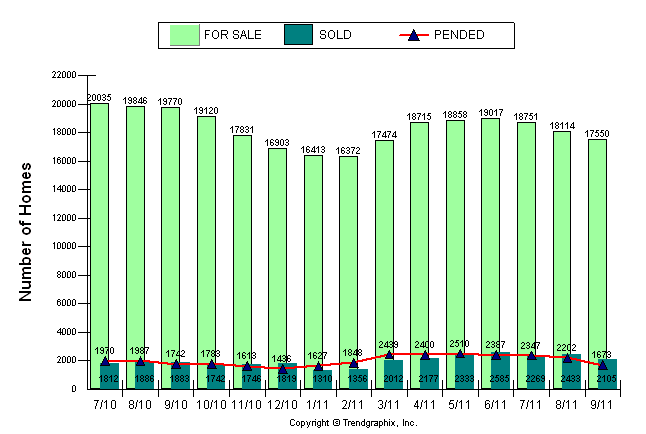
In comparing September 2011’s market stats to September 2010, we find there’s fewer homes on the market and more homes are selling. This is great news for Kansas City homes sellers as we look to achieve a balanced real estate market not seen for several years in Kansas City. In September of 2010 there were 19,770 homes on the market, while this September that figure dropped to 17,550. In September 2010 there were 1,883 homes Sold (closed) while this September that figure improved to 2,105 homes Sold.


These figures calculate to an improvement from 10.5 months of inventory on the market last year to 8.3 months of inventory on the market this September. 5 to 7 months of inventory is considered to be a balanced real estate market, not necessarily favoring Kansas City home buyers or home sellers. Shaving off more than two months of inventory the past year goes a long way towards stabilizing home prices.

Once the glut of distressed foreclosure and short sale listings slows, the months of inventory could get back below the 7 month range. When this happens, we’ll likely be well on our way to a real estate recovery and home buyers will find it unlikely to find the great deals available in today’s market and with today’s 30-year fixed interest rates that are in the 3’s.


Posted by Jason Brown

Add to DeliciousAdd to DiggAdd to FaceBookAdd to Google BookmarkAdd to RedditAdd to StumbleUponAdd to TechnoratiAdd to Twitter

Will Mortgage Interest Rates Not Seen Since The 1970’s Get Kansas City Home Buyers Off The Fence?

Checking The Pulse Of The Kansas City Real Estate Market

Mortgage rates have now hit 40 year lows but many Kansas City home buyers are remaining cautious. Freddie Mac reports that the average 30-year fixed rate loan nationally had an interest rate of 4.22 percent — mortgage rates we haven’t seen since 1971. Low mortgage interest rates allow many home buyers to get into a home with a lower monthly payment or to buy a home larger than they otherwise would have been able to purchase. Despite low mortgage interest rates that most of our parents have never even enjoyed, other economic concerns have home buyers weighing their options. 


My group has many buyers sitting on the sidelines due to an uneasy feeling about the economy, many specifically questioning whether they’ll have their job a year down the road to continue making their mortgage payments. These buyers are pre-approved for a home loan but even their increased purchasing power due to today’s low interest rates isn’t enough to get some of them off the fence.

To ensure our home buyers have the info they need to make an informed real estate decision, we go over the implications of rising or falling interest rates. A buyer who waits a year could theoretically purchase a home for 5% less (if home prices fall) but that could be completely counteracted if mortgage rates rise 0.5% during the same time. Interest rates have a powerful effect on home buyers and should always be one of the most important factors considered when buying a home a home (assuming a buyer isn’t paying cash for the home). 


Posted by Jason Brown

Add to DeliciousAdd to DiggAdd to FaceBookAdd to Google BookmarkAdd to RedditAdd to StumbleUponAdd to TechnoratiAdd to Twitter