Kansas Property Tax Collections Are Still Rising Despite Lower Property Values In Many Areas

Checking The Pulse Of The Kansas City Real Estate Market

More than 1/3 of all property taxes collected in the state of Kansas come from property taxes. In 2010, property taxes accounted for 35% of the taxes collected overall by both state and local governments across Kansas. According to the KS Department of Revenue, taxes increased 94% between the late 1990’s to 2010. These taxes brought in $1.97 billion dollar in tax revenues in 1997 with that figure jumping to $3.8 billion in 2010. Check out the startling trend of rising property taxes compared to inflation rates.
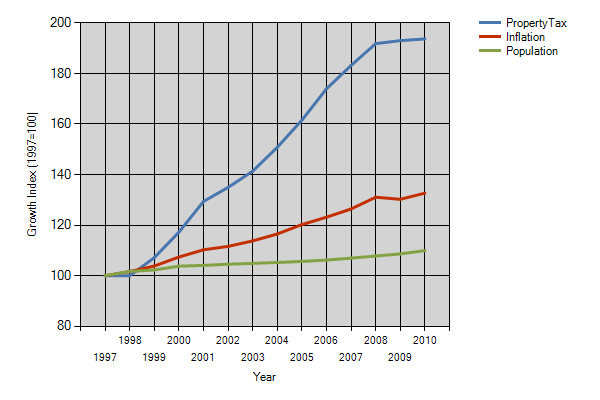
Though the short-term trend in the chart shows more moderate property tax increases since 2008, the Kansas Association of Realtors is concerned that some sort of property tax reform will be required if we are to avoid a continuation of this troubling trend. Should we see a similar doubling of property taxes within the next decade or so, that trend would not benefit hopes for a housing rebound in the near future. It would certainly put more homeowner’s under water and the dream of homeownership out of reach for many more.


Posted by Jason Brown

Add to DeliciousAdd to DiggAdd to FaceBookAdd to Google BookmarkAdd to RedditAdd to StumbleUponAdd to TechnoratiAdd to Twitter

Data Indicates There Could Be 4 Million More Foreclosure Listings On The Way

Checking The Pulse Of The Kansas City Real Estate Market

Property data on distressed properties across the U.S. has been compiled by The McClatchy Company and findings indicate it’s very possible there could be another 4 million distressed properties on the market in the next year or two. If true, that would double the supply of residential real estate on the market and thus double the months of inventory home sellers are up against with selling their homes. It will certainly have an effect on home values across the U.S. and our local real estate market in Kansas City, Johnson County KS, Overland Park and the surrounding areas won’t be immune.

Consider that The McClatchy Company’s analysis finds there’s about 3.5 million homes currently for sale in the U.S. There’s 600,000+ homes currently owned by lenders but NOT yet listed for sale. There’s 2.2 homeowners who are 90+ days late and who HAVE received either an initial foreclosure notice or notice of default. There’s 1.9 million homeowners who are 90+ days late but have NOT yet received a foreclosure notice or notice of default.

Add it all together and that’s how we arrive at the estimate that there could be another 4 million in distressed properties hitting the market in the next year or two. Until the volume of homes for sale, along with the shadow inventory (likely foreclosure listings that are not yet on the market) get in check, it’s likely that the real estate market will remain volatile for at least a year or more. That means a continuation of our current buyer’s real estate market. As long as interest rates remain low, we’re likely to look back in 5, 10, 20… 50 years and find that the next year or two were the best time ever to buy a home.


Posted by Jason Brown

Add to DeliciousAdd to DiggAdd to FaceBookAdd to Google BookmarkAdd to RedditAdd to StumbleUponAdd to TechnoratiAdd to Twitter

Kansas City Area Real Estate Market Stats: Comparing Our Current Market To 1 Year Ago

Checking The Pulse Of The Kansas City Real Estate Market

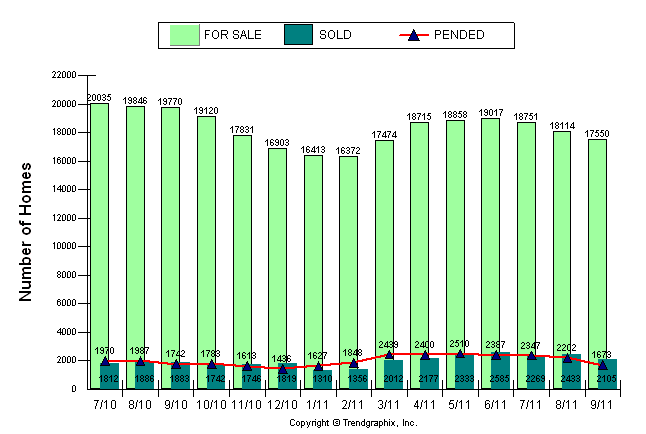
In comparing September 2011’s market stats to September 2010, we find there’s fewer homes on the market and more homes are selling. This is great news for Kansas City homes sellers as we look to achieve a balanced real estate market not seen for several years in Kansas City. In September of 2010 there were 19,770 homes on the market, while this September that figure dropped to 17,550. In September 2010 there were 1,883 homes Sold (closed) while this September that figure improved to 2,105 homes Sold.


These figures calculate to an improvement from 10.5 months of inventory on the market last year to 8.3 months of inventory on the market this September. 5 to 7 months of inventory is considered to be a balanced real estate market, not necessarily favoring Kansas City home buyers or home sellers. Shaving off more than two months of inventory the past year goes a long way towards stabilizing home prices.

Once the glut of distressed foreclosure and short sale listings slows, the months of inventory could get back below the 7 month range. When this happens, we’ll likely be well on our way to a real estate recovery and home buyers will find it unlikely to find the great deals available in today’s market and with today’s 30-year fixed interest rates that are in the 3’s.


Posted by Jason Brown
Add to DeliciousAdd to DiggAdd to FaceBookAdd to Google BookmarkAdd to RedditAdd to StumbleUponAdd to TechnoratiAdd to Twitter

Will Mortgage Interest Rates Not Seen Since The 1970’s Get Kansas City Home Buyers Off The Fence?

Checking The Pulse Of The Kansas City Real Estate Market

Mortgage rates have now hit 40 year lows but many Kansas City home buyers are remaining cautious. Freddie Mac reports that the average 30-year fixed rate loan nationally had an interest rate of 4.22 percent — mortgage rates we haven’t seen since 1971. Low mortgage interest rates allow many home buyers to get into a home with a lower monthly payment or to buy a home larger than they otherwise would have been able to purchase. Despite low mortgage interest rates that most of our parents have never even enjoyed, other economic concerns have home buyers weighing their options. 


My group has many buyers sitting on the sidelines due to an uneasy feeling about the economy, many specifically questioning whether they’ll have their job a year down the road to continue making their mortgage payments. These buyers are pre-approved for a home loan but even their increased purchasing power due to today’s low interest rates isn’t enough to get some of them off the fence.

To ensure our home buyers have the info they need to make an informed real estate decision, we go over the implications of rising or falling interest rates. A buyer who waits a year could theoretically purchase a home for 5% less (if home prices fall) but that could be completely counteracted if mortgage rates rise 0.5% during the same time. Interest rates have a powerful effect on home buyers and should always be one of the most important factors considered when buying a home a home (assuming a buyer isn’t paying cash for the home). 


Posted by Jason Brown

Add to DeliciousAdd to DiggAdd to FaceBookAdd to Google BookmarkAdd to RedditAdd to StumbleUponAdd to TechnoratiAdd to Twitter

Conflicting Data: Falling Number Of Home Sales, Rising Median Home Sale Prices

Checking The Pulse Of The Kansas City Real Estate Market

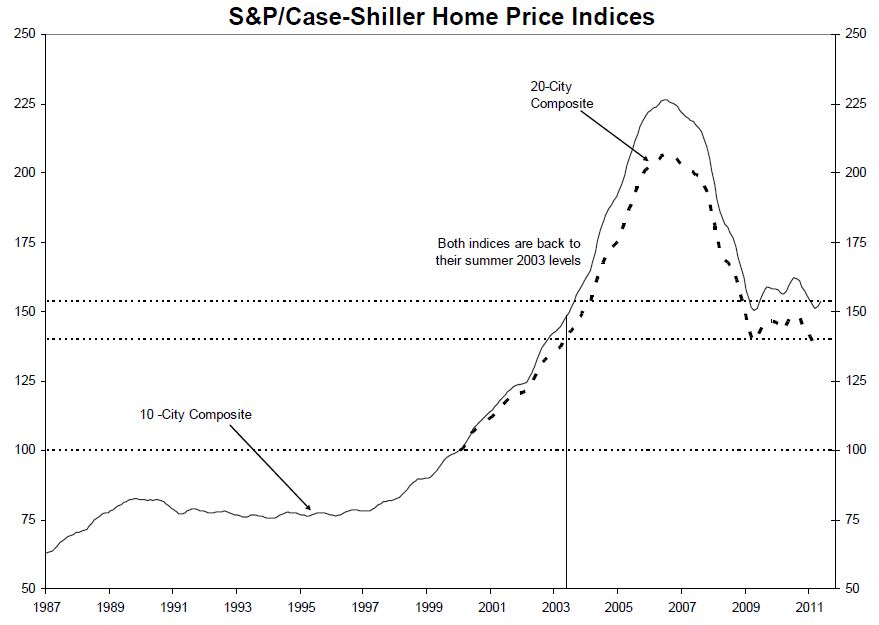
The Case-Schiller 20-city real estate index – which provides data on a sampling data on our national metro area real estate markets – shows that we’re nearing an all time low in the volume of home sales. It’s interesting that while home sales fell 1%, median sales prices rose an astounding 5.8% during the same period. Despite that rise in sales prices, the decline in the volume of home sales overall has the 20-city index nearing its lowest point since November 2009. Note how this graph shows us back at 2003 levels.


It’s noteworthy that the last several years shows the real estate market has been relatively stable. The  Case-Schiller 20-city index tells us that 80% of the cities experiencing monthly increases in sales prices but annually 19 of the 20 cities experienced lower sales prices.  Home sales overall are nearing their lowest point ever and if that trend continues it’s unlikely average home sales prices will continue to buck the trend.


Posted by Jason Brown

Add to DeliciousAdd to DiggAdd to FaceBookAdd to Google BookmarkAdd to RedditAdd to StumbleUponAdd to TechnoratiAdd to Twitter

Mixed Signals On What To Expect With Future Kansas City Real Estate Foreclosures

Checking The Pulse Of The Kansas City Real Estate Market

I was surprised to hear the volume of foreclosures nationally has slowed significantly. These are credible year-over-year stats as reported by RealtyTrac. Indications are that foreclosure activity has dropped 1/3 May 2011 compared to May of last year. This puts foreclosures at a four-year low. In May, about 1 in 600 homeowners received some sort of foreclosure filing, which could include a default notification, scheduling of an auction date, finalized repossession, etc. 


Still, most experts agree there’s 2 to 3 years worth of distressed property inventory to eat up across the U.S. Additionally, I’ve seen estimates that for every current REO foreclosure listing, there’s two more listings yet to hit the market. If true, that’s going to significantly impact the promising reports of falling foreclosure activity nationally. I wonder if the build-up is due more to banks having trouble getting properties ready to go on the market, banks using discretion to not flood the real estate market with more distressed properties or if a lot of its to do with lenders being forced to change how they handle the process and thus having to re-start many foreclosure proceedings.


Posted by Jason Brown

Add to DeliciousAdd to DiggAdd to FaceBookAdd to Google BookmarkAdd to RedditAdd to StumbleUponAdd to TechnoratiAdd to Twitter

Johnson County Kansas Real Estate Market Outpacing State Of Kansas Overall Stats

Checking The Pulse Of The Kansas City Real Estate Market

My National Association of Realtors (NAR) report on May’s real estate market stats indicates that home sale fell more than 20% compared to last May. That may seem startling but we were still in the home tax credit era at that time last year, so you’d expect stats from a year ago to be better. NAR points out that May 2011 home stats compare favorably to May 2009 home stats (when there was no tax credit in effect skewing the numbers). The actual sales figures for 2011 compared to 2010 were 2,760 to  3,484 homes sold, respectfully. Nationally home sales fell 15%, May 2011 compared to May 2010.


When we compare the 20,261 homes for sale in Kansas (at the end of May) to the 2,760 homes sold during the month of May, we find there was 7.3 months of inventory on the market in the state of Kansas at the end of May. The average sales price in May of this year was $156,432, which is virtually identical to the $156,521 in May 2010. It’s apparent that Kansas home sellers continue to face a buyer’s market this summer.

Locally in Johnson County Kansas, the market continues to stabilize. 704 homes were sold in Johnson County Kansas this May. Compare that monthly sales rate to the 4,148 homes currently for sale in Johnson County Kansas and we find there’s 5.9 months of inventory in Johnson County. That amount of inventory is considered a stable real estate and could be a very good sign for Johnson County home sellers.


Posted by Jason Brown

Add to DeliciousAdd to DiggAdd to FaceBookAdd to Google BookmarkAdd to RedditAdd to StumbleUponAdd to TechnoratiAdd to Twitter

Potential FHA Loan Changes Would Have A Drastic Effect On Kansas City Home Buyers… And Home Sellers

Checking The Pulse Of The Kansas City Real Estate Market

Mortgage industry consultant Brian Chappelle estimates that FORTY PERCENT of home buyers would fall out of the market-place if FHA raises the minimum down payment requirement from 3.5% to 5%. I just don’t see how we can afford to implement these types of drastic changes with a real estate market – and economy – already on edge. The lack of buyer demand is already harming property values across the country and imagine what would happen if 40% of home buyers disappeared due to sweeping FHA mortgage changes.


Increasing the minimum down payment from 3.5% to 5% on a $200,000 Johnson County Kansas home, would increase the home buyer’s down payment from $7,000 to $10,000. That’s a very significant THREE THOUSAND dollars and anyone thinking the potential FHA changes would be insignificant should think again.  $3,000 is guaranteed to run many home buyers we’re working with right now out of buying home. That will mean less demand for area home sellers and we all know what that means — lower sales prices.  These changes are very likely to happen though as we work to lessen the government’s involvement in the housing market. I hope there’s someone with a good head on their shoulders suggesting they SLOWLY (incrementally?) implement these types of changes. If not, it’s going to be a bumpy ride. 


Posted by Jason Brown

Add to DeliciousAdd to DiggAdd to FaceBookAdd to Google BookmarkAdd to RedditAdd to StumbleUponAdd to TechnoratiAdd to Twitter

Most Believe A Real Estate Market Recovery Is At Least A Couple Of Years Away

Checking The Pulse Of The Kansas City Real Estate Market

A collaborative report by Trulia.com and RealtyTrac.com finds that 54% of a random 2,000+ people surveyed believe the soonest the housing market will recover is 2014. Perception is reality and for more than half of the people surveyed to believe that, we’re in for a long road ahead. Just six months ago a similar poll found 34% of respondents believed the soonest the housing market would recover would be in 2014. To find that 20% more people feel this way just six months later won’t come as a surprise to many home sellers out there and the path to a successful home sale is clearly ever-changing.

Just 18% of those polled felt the real estate market would improve in 2012 or sooner. It’s possible that things can change that quickly. Truly though, I believe NO ONE can predict just how fast things may improve. Once enough home buyers start jumping back into the market (in anticipation we’re on our way up), it’s anyone’s guess how much affect that will have on home prices.  It could depend whether foreclosures are rising or falling when we get to that point and, again, NO ONE can predict the timing of that either.


Posted by Jason Brown

Add to DeliciousAdd to DiggAdd to FaceBookAdd to Google BookmarkAdd to RedditAdd to StumbleUponAdd to TechnoratiAdd to Twitter

Let’s Hope Home Prices In Kansas City Don’t Fall 5% In The Next Year

Checking The Pulse Of The Kansas City Real Estate Market

I’ve seen multiple reports recently that home prices nationally could fall another 5% in the next 12 months. The foreclosure trend we’ve been seeing is expected to continue and that, along with the unemployment rate and overall slow economy, play a large role in those predictions. Our market here locally appears more stable than many areas, so there’s reason to be hopeful that the Kansas City metro area will continue bucking the overall national trends. I do find it interesting that the Kansas City metro area rarely gets mentioned in most articles covering the national real estate market. Maybe that’s a good thing.

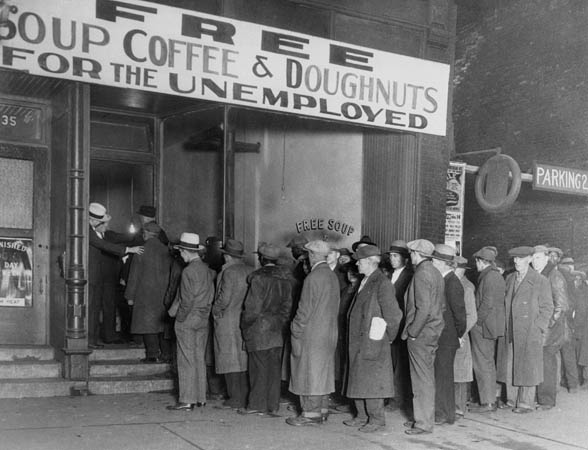
Some of the reports I’ve been reading are eye-opening, like the one about how home prices have now fallen further than they did during the Great Depression.  I made some quick notes on a recent article that estimated home prices fell 31% during the Great Depression, compared to the 34% decline in during the current real estate downturn. That’s almost unbelievable. But since real estate is local and we haven’t experienced the peeks and values that many other parts of the county have experienced, there’s reason to be optimistic. Be sure to keep track of our current real estate market stats and trends here, so you’ll be on top of the local market when it’s time to buy or sell a home in Kansas City, Johnson County KS or the surrounding metro area.


Posted by Jason Brown

Add to DeliciousAdd to DiggAdd to FaceBookAdd to Google BookmarkAdd to RedditAdd to StumbleUponAdd to TechnoratiAdd to Twitter