A Year Of Real Estate Market Stats Covering the Entire Kansas City Metro Area

Checking The Pulse Of The Kansas City Real Estate Market

Here’s a look at the real estate stats for the entire Kansas City metro MLS area. This includes  Johnson County Kansas, Overland Park, Olathe, Leawood, Lenexa, Shawnee, Prairie Village, Lee’s Summit, Independence, Blue Springs, Grandview, Liberty, KCK and every listing in between that reports to the MLS. The graph below is a look at the past 14 months of real estate activity. You’ll see in the light green area that there was a significant dip in the volume of homes on the market in January and February. Since that time, the spring real estate market has brought the typical jump in the number of Kansas City homes for sale. But we’re still below the volume of homes that were on the market this time last year and that’s a good sign.

We won’t compare April’s sales rate to last April’s because you can see last year’s stats were grossly inflated by the home buyer tax credit that was still in effect. Looking at just the past few months, sales in both March and April (individually) were better than and other month since the tax credit ended (with the exception of July last year).

Posted by Jason A. Brown

Add to DeliciousAdd to DiggAdd to FaceBookAdd to Google BookmarkAdd to RedditAdd to StumbleUponAdd to TechnoratiAdd to Twitter

If Your Overland Park Home Has Mold, Don’t Take Short Cuts To Fix The Problem

Checking The Pulse Of The Kansas City Real Estate Market

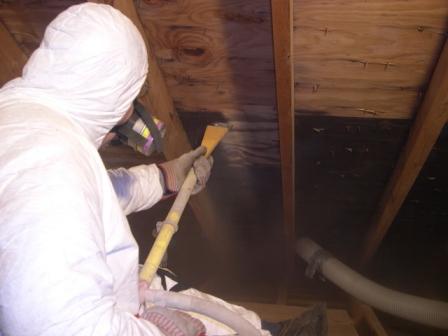
Nearly every home and office building have conditions that make the structure perfect for mold growth. From the products in the home to the perfect room temperatures, your home is ready to grow mold if you simply add the missing ingredient. The missing ingredient is water and, without it, you won’t have to worry about mold. This is why it’s so important to address water issues in your home at the first sign of problems. If you have a plumbing leak in your home, fix it immediately. If you have a window leak, siding leak, roof leak or flashing leak, get a contractor out to properly seal your home up and keep moisture where it belongs – outside of your home. 


Proper maintenance and addressing issues when they first appear will help prevent more costly repairs later. Keeping mold from growing is also important because mold can cause severe health problems. If you’re too late for preventative measures and you find mold in your home, what should you do?  The first step is getting an appropriate contractor out to stop the leak that’s allowing water into your home. Then it’s time to deal with mold. The home inspectors I’ve spoken with say that simply applying bleach to the area is not a satisfactory method (and can actually make the situation worse in many cases). Using this method might kill the surface mold but you also need to know that the hidden mold is killed — or the problem will still be present (just not visibly). 

There are different methods that mold mitigation companies use to kill mold. One company I have experience with here locally is PuroClean here in Johnson County Kansas. They came into one of my Overland Park client’s home to analyze a mold situation. They provided a bid, completed the remediation, did a re-test and the job was completed to both home seller and home buyer’s satisfaction and everyone came away feeling the mold situation had been properly addressed.


Posted by Jason A. Brown

Add to DeliciousAdd to DiggAdd to FaceBookAdd to Google BookmarkAdd to RedditAdd to StumbleUponAdd to TechnoratiAdd to Twitter

Taking A Look At The National Housing Stats As We Head Into The Prime Selling Season

Checking The Pulse Of The Kansas City Real Estate Market

My National Association or Realtors (NAR) reports that existing home sales in March rose 3.7% over February’s stats. The numbers were down 6.3% however when compared to March of last year. But we were still in the tax credit era at that time, so it’s not a real fair comparison to gauge last March against today’s real estate market. Comparing March stats to February’s however does bring better news to Kansas City home sellers as we head into the prime home selling season.


Existing home sales have in fact risen in all but 2 of the last 8 months. That’s great news. A NAR survey shows that 33% of homes purchased in March were bought by First Time Home Buyers. NAR also reports the average existing home price in March was just under $160,000 — an almost 6% drop from March of 2010 – and an astounding 40% of total sales were distressed properties, such as bank foreclosures and short sales.


Posted by Jason A. Brown

Add to DeliciousAdd to DiggAdd to FaceBookAdd to Google BookmarkAdd to RedditAdd to StumbleUponAdd to TechnoratiAdd to Twitter

Uncle Sam… Always There To Lend A Helping Hand

Checking The Pulse Of The Kansas City Real Estate Market

Tax his land, tax his wage,
Tax his bed in which he lays.
Tax his tractor, tax his mule,
Teach him taxes is the rule.
Tax his cow, tax his goat,
Tax his pants, tax his coat.
Tax his ties, tax his shirts,
Tax his work, tax his dirt.
Tax his chew, tax his smoke,
Teach him taxes are no joke.
Tax his car, tax his ass
Tax the roads he must pass.
Tax his tobacco, tax his drink,
Tax him if he tries to think.
Tax his booze, tax his beers,
If he cries, tax his tears.
Tax his bills, tax his gas,
Tax his notes, tax his cash.
Tax him good and let him know
That after taxes, he has no dough.
If he hollers, tax him more,
Tax him until he’s good and sore.
Tax his coffin, tax his grave,
Tax the sod in which he lays.
Put these words upon his tomb,
“Taxes drove me to my doom!”
And when he’s gone, we won’t relax,
We’ll still be after the inheritance TAX!

Posted by Jason A. Brown

Add to DeliciousAdd to DiggAdd to FaceBookAdd to Google BookmarkAdd to RedditAdd to StumbleUponAdd to TechnoratiAdd to Twitter

Home Sellers Reduced Home Prices $24 Billion During The Past 12 Months

Checking The Pulse Of The Kansas City Real Estate Market

According to Trulia, home sellers nation-wide lost $24 billion in potential equity by way of price reductions taken when selling their homes. Many of the homes included in the report are still on the market and will see further price reductions before selling. Nationally, home prices were down 6.7% in the U.S. in February (year-over-year). Extremely motivated home sellers should watch the video in the link below and be sure their real estate agent is giving them the local real estate market stats, so they can make an informed real estate decision…

Realty Check: Pricing Under Pressure
Thu 07 Apr 11 | 04:25 PM ET


Posted by Jason A. Brown

Add to DeliciousAdd to DiggAdd to FaceBookAdd to Google BookmarkAdd to RedditAdd to StumbleUponAdd to TechnoratiAdd to Twitter

National Home Prices Take Huge Dip Back To 2002 Levels

Checking The Pulse Of The Kansas City Real Estate Market

The U.S. accused Saddam Hussein of developing chemical, biological and nuclear weapons. An arrest was made in the D.C. sniper gun attacks. Enron happened. That was a long time ago… 9 years to be exact. And the value of the average U.S. home today is now equivalent to the average home price at the time of those events, according to the S&P/Case-Shiller price index. The downward trend is likely to continue until the volume of new foreclosure listings slows. Nearly 40% of U.S. homes sold last month were foreclosures or Short Sales (upside down homeowners praying their lender will accept a payoff lower than the borrower’s loan amount).


The conditions present today make it tough for many typical home sellers to catch a break. Some sellers become nervous when their homes don’t sell quickly. Many will make a knee-jerk reaction to drastically lower their prices as they work to gain market acceptance. This erodes values of surrounding homes and becomes a vicious cycle in some cases. To break the cycle, I believe we’re going to need an extended run of positive economic news (should create more buyer demand in the market) and a sizable reduction in the volume of foreclosure listings hitting the market (less supply of distressed homes will increase the demand for typical resale homes).

Some people predict we’ll never again see the real estate appreciation rates we saw for years in our country. While that may be true, to say that the housing market isn’t going to rebound would be bucking history.  Real estate has always rebounded and the pride of homeownership is one of the things that makes our country great. I am amazed when I hear the occasional person say that it’s crazy to own a home. I always tell them, someone is going to own the home they live in. Would they rather it be a landlord making the decisions for them the rest of their lives? I’ve yet to hear a plausible response to the question.  Real estate is also a LOCAL phenomena and the numbers reported nationally are drug down drastically by the real estate bubbles that burst in portions of California, Florida, Colorado and Arizona.


Posted by Jason A. Brown

Add to DeliciousAdd to DiggAdd to FaceBookAdd to Google BookmarkAdd to RedditAdd to StumbleUponAdd to TechnoratiAdd to Twitter

Kansas City Mortgage Interest Rates Fall For Third Straight Week

Checking The Pulse Of The Kansas City Real Estate Market

Mortgage rates were inching higher around the new year but we’ve seen them in a downward trend recently and have actually seen rates drop for a third consecutive week. This is an amazing benefit to buying in today’s real estate market and it’s likely 20 years from now we’ll look back in amazement on the interests rates some of us were able to secure. If you’re considering buying a home, the average national 30-year fixed interest is hovering around 4.75%. Most experts believe interest rates will hold steady for at least the next few weeks.

This week I’ve received notifications from Bank of America advertising 30-year fixed rates at 4.625% and from Wells Fargo advertising 4.875%. Mortgage rates with most lenders change daily and some even update their quoted rates twice a day. So take any interest rate quote you see with a grain of salt because they probably will have changed – possibly up or down – by the time you contact the lender. When buying a home, contact your lender and lock in your rate. If you have a contract, you can lock in the current interest rate for free. If you’re just starting the Kansas City home buying process, you can often pay around $150 to lock in the current interest rate for 60 days. Once you’ve locked in your interest rate, it doesn’t matter if interest goes up during the lock period, because your rate is guaranteed.

Posted by Jason A. Brown

Add to DeliciousAdd to DiggAdd to FaceBookAdd to Google BookmarkAdd to RedditAdd to StumbleUponAdd to TechnoratiAdd to Twitter

Good News, Bad News: Kansas Home Sales Rise 5% But Sale Prices Fall 8%

Checking The Pulse Of The Kansas City Real Estate Market

My Kansas Association of Realtors (KAR) report on January’s real estate market indicates the volume of home sales is picking up steam. Overall in the state of Kansas, home sales (closings) rose 5.6% in January 2011 compared with January of 2010. This is impressive when you consider that 2009’s figure was inflated by the home buyer tax credit. This market improvement outpaced the national market improvement of 5.3% and these figures are promising both locally and nationally.

There’s still too many homes on the market however, leaving 13.3 months of inventory in the state of Kansas. The months of inventory was calculated using the number of January home sales and dividing that figure into the 17,805 listings that were for sale at the end of January. With still too much supply for demand, homes sellers saw their average sales prices fall from around $160,000 in January 2010 to around $147,000 January of this year. That’s a significant 8% fall in home prices across the state.

Looking closely at our local market in Johnson County Kansas, 321 homes were sold (closed) in January. This was virtually unchanged from the 328 home sales in Johnson County in January 2010. Comparing this January’s sales rate to the amount of inventory currently on the market, we find there’s 11.1 months of inventory available. This amount of inventory indicates a clear buyer’s real estate market in Johnson County Kansas and anyone in the market to make a move should contact us to see some of the great Johnson County Kansas homes for sale.

Posted by Jason A. Brown

Add to DeliciousAdd to DiggAdd to FaceBookAdd to Google BookmarkAdd to RedditAdd to StumbleUponAdd to TechnoratiAdd to Twitter

How Would Elimination Of 30 Year Fixed Rate Loans Affect Kansas City Home Buyers?

Checking The Pulse Of The Kansas City Real Estate Market

The other day a Realtor told me she didn’t care if Fannie Mae never backed another loan. Her argument was that Fannie Mae is backed by the government and government shouldn’t be meddling in the mortgage business. She added that the failed loans that Fannie Mae provided are a large reason for the downturn in the real estate market. There is some truth to that but the problems we’re faced with run deeper. But even if you agree 100% with this agent’s assessment, consider this… Fannie Mae is the major reason the majority of home loans were made during recent decades. Without Fannie Mae many Americans would not have a home and those who still would wouldn’t have mortgage loans as we know them today.

Without Fannie Mae, there would likely be no more 30 year fixes rate loans made. Why is this you ask? Because many private lenders aren’t willing to guarantee an interest rate for 30 months, much less 30 YEARS. And that’s exactly what Fannie Mae promotes. You go to your local bank to get a loan, your local bank runs a combination of you and your home through the Fannie Mae underwriting system and, if things look good, Fannie Mae will guarantee a 30 year fixed rate loan… and you get your loan. If interest rates jump from 5% to 10% over the coming years, there’s no worries because your interest rate is locked and guaranteed.

But if Fannie Mae wasn’t standing there to back the loan, do you think your local bank would lock and guarantee an interest rate for 30 years? Most banks wouldn’t do it when times were great, so most surely won’t do it today. What does all this mean to us as home buyers? If Fannie Mae goes out of business, the available loan types that our local lenders will make will be MUCH more conservative. Start thinking about 3 years ARMS which put the interest rate risk on you as the buyer and takes long-term interest rate risk off the banks making the loans. Yes, I’m talking about those same 3 year ARMS that caused tons of foreclosures when the interest rates starting re-setting in year 4.


Posted by Jason A. Brown

Add to DeliciousAdd to DiggAdd to FaceBookAdd to Google BookmarkAdd to RedditAdd to StumbleUponAdd to TechnoratiAdd to Twitter

Any Way You Slice It, Shadow Inventory Will Have A Lingering Effect On Kansas City Real Estate Values

Checking The Pulse Of The Kansas City Real Estate Market

If you’re not familiar with the term Shadow Inventory, it means homes that are NOT on the market but will be in the near future. This includes bank owned properties that are not yet listed but also includes homes where the owners are significantly behind on payments — and that are likely to be bank-owned properties in the near future. At the slow sales pace being seen nationally, the Wall Street Journal has done some analysis and found there’s more than EIGHT YEARS of Shadow Inventory to be absorbed.


That number is staggering. Of course, it calculates matters using current sales rates. But even if home sales DOUBLED over, say, the next six months, that would reduce the Shadow Inventory to FOUR YEARS. Taking this painful excercise a step further, home sales would need to octuple to get it down to just ONE YEAR of REO shadow inventory we’re faced with today.

A high amount of Shadow Inventory leads to lower prices on bank properties as banks look to move them. Lower prices on bank properties bring down values of the stable homes in a community. That hurts even more homeowners and causes otherwise solid borrowers to be upside down on their homes. This leads to more Short Sales, which are half as bad for a community as a foreclosure but hurtful none-the-less. This leads to lower sales prices for solid borrowers in the area. Which leads to… me being depressed discussing Shadow Inventory.

Now you could also run with Standard & Poor’s estimate that there’s “just” four years of Shadow inventory on the market. Or, if your cup is half full, you could trust that my National Association of Realtors is correct with its assessment that only two percent of the nations properties should be considered Shadow Inventory.


Posted by Jason A. Brown

Add to DeliciousAdd to DiggAdd to FaceBookAdd to Google BookmarkAdd to RedditAdd to StumbleUponAdd to TechnoratiAdd to Twitter